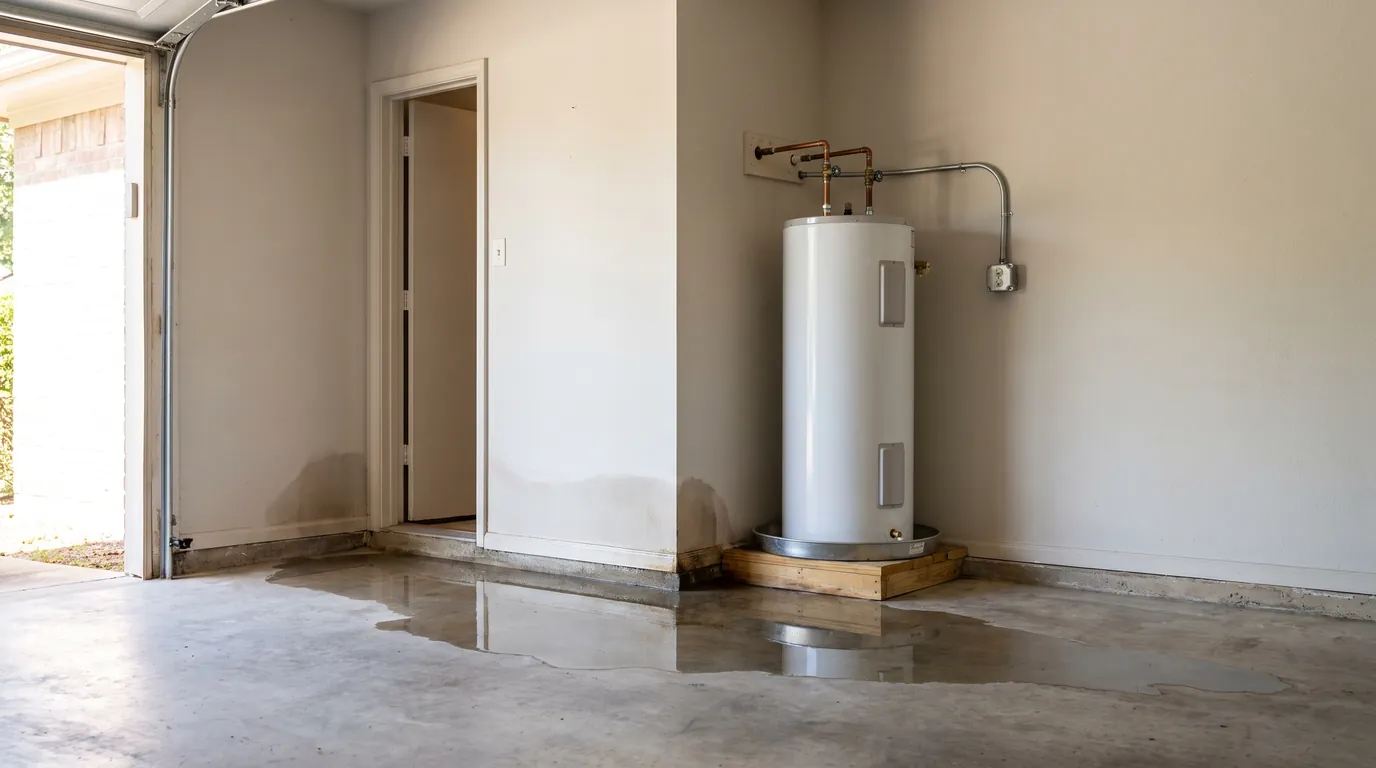
Stop the water first
Most water heaters have a valve on the cold-water line entering the top of the tank. Close that valve, or shut off the main. If you have an electric heater, switch off its breaker so the elements don’t run in an empty tank. If you have a gas heater, leave the gas to the plumber, and if you smell gas, get out of the house first.
What the leak’s location tells you
A fitting dripping on top is the easy case. Water running down the side of the tank often comes from the pressure relief valve, which a plumber can replace. Water coming from the bottom usually means the tank itself has failed, and the whole heater gets replaced.
ENERGY STAR suggests considering a new heater once yours is more than 10 years old, before an emergency forces the decision. The plumber makes the call on the heater, and we take moisture readings around it either way.
Garage, hall closet, or attic
In a garage, water spreads across the slab and soaks the bottom of the wall shared with the house. From there, it reaches the carpet or flooring inside. When the heater is in a hall closet, water runs under the closet wall into the hallway and the bedrooms next to it.
In an attic, water soaks the insulation and comes through the ceiling, sometimes in more than one room. A drain pan under the tank holds a slow drip. A failed tank overflows the pan. We open the ceiling or the bottom of the walls only where moisture readings show they’re wet.
Insurance and repair costs
The Texas Department of Insurance’s home insurance guide says most policies cover water released suddenly and accidentally, and most don’t cover a continuous leak, so a tank that lets go overnight and a drip that runs for months aren’t the same claim. HomeGuide (August 2025) publishes a range of $100 to $1,000 for water heater leak repair and a range of $600 to $1,800 for a new heater, which a leaking tank typically needs. Our guides cover Texas homeowners insurance and what water damage costs.