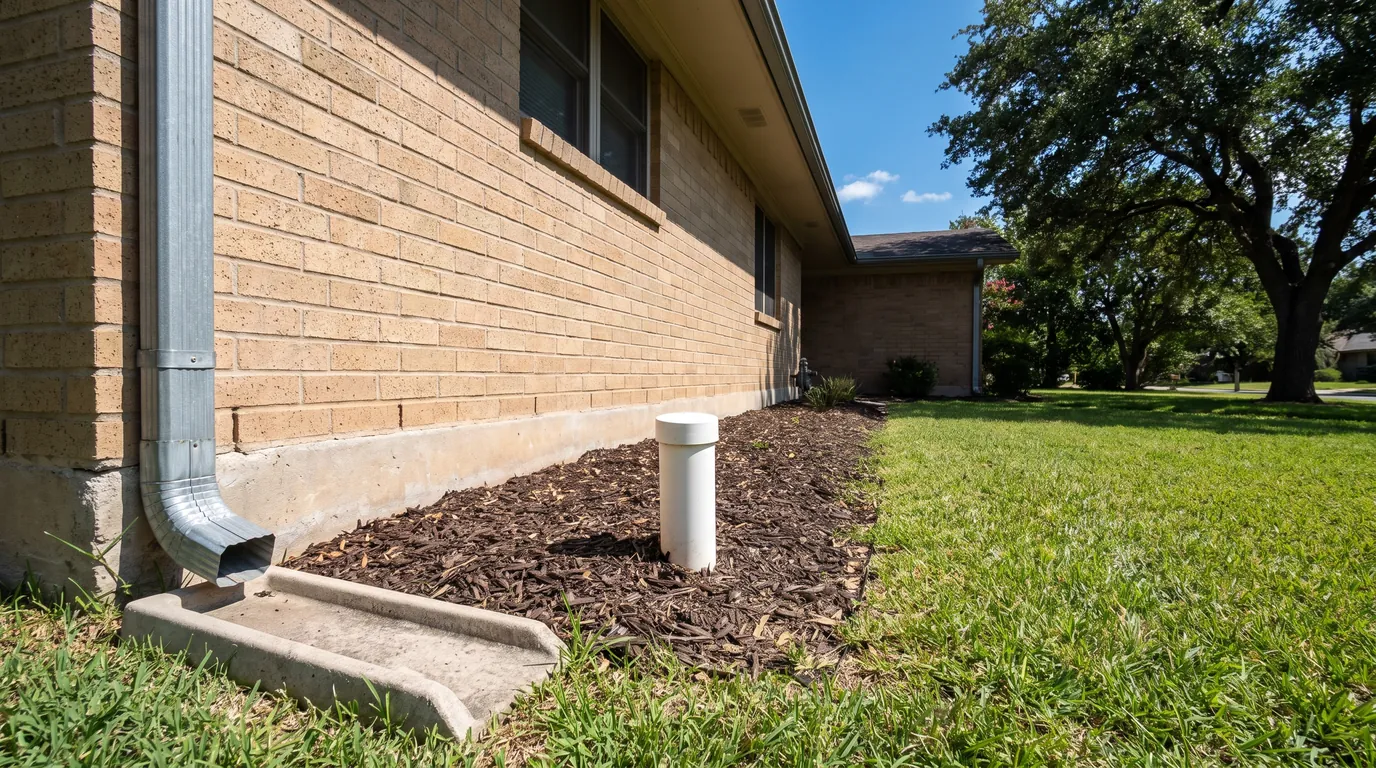
Austin’s sanitary sewer runs through pipes separate from storm drains, but rain can still get into it. The EPA explains that storm water and ground water enter sanitary sewers through cracks, leaky joints, and connected downspouts and drains, which can overload the system. Austin Water lists infiltration from groundwater and rainwater among the top five causes of raw sewage overflows.
FEMA explains that backups happen when the system can’t drain as fast as it’s being filled. Sewage flows back through floor drains, toilets, sinks, or any fixture connected to the sewer line. In a slab house, the lowest drains are usually a ground-floor shower, tub, or toilet.
What to do while it’s backing up
Austin Water’s sewage overflow flyer gives these steps:
- Stop using any water in the house.
- Call the Austin Water Dispatch Office at 512-972-1000.
- Take the cap off your cleanout, the capped pipe in the yard that opens into your sewer line, to relieve pressure and reduce sewage backing up into the house. The property owner’s cleanout cover is typically 4 inches across.
- If your home, yard, or road is flooding, report it to 3-1-1 as the City of Austin asks.
The CDC says to wear rubber boots, rubber gloves, and goggles if sewage is involved, and to keep children out of the cleanup.
Who’s responsible in Austin
Austin Water explains on its Private Lateral Program page that a private lateral is the wastewater line connecting a building to the city’s system and belongs to the property owner. Its flyer makes the owner responsible for overflows caused by defects in the private wastewater line and requires a plumbing permit to repair or replace it. The city is responsible for overflows caused by defects in city-owned pipes or severe weather events and repairs them at no cost to you. The flyer lists the Claims Department at 512-974-2268.
Austin’s city code treats a downspout or drain that lets storm water into the sanitary sewer as a defect in the private lateral. The owner must fix it within 120 days of notice. Austin Water’s Private Lateral Grant Program repairs or replaces the line for free for eligible single-family and duplex owners at or below 100 percent of the area median family income.
Backwater valves
In its urban flooding guidance, FEMA describes a backwater valve as a device that lets wastewater flow out of your house while keeping it from backing up into the house during heavy rain, when the city’s sewer mains are at capacity. A qualified, licensed plumber should install it. Austin Water says plumbing work on the lateral, the sewer line from your house to the main, needs a permit from Austin Development Services. The Insurance Institute for Business and Home Safety suggests asking a plumber about a valve if your house is below street level.
FEMA cautions that when the valve closes, water used inside the house can’t drain out either. During heavy rain, avoid flushing toilets and running sinks, showers, the washer, and the dishwasher. The valve is part of the lateral, and the owner maintains it.
Keeping rain away from the sewer and the slab
Austin Water and FEMA offer these steps to keep rainwater out of the sanitary sewer and away from your house:
- Don’t connect storm drains or rain gutters to the sanitary sewer.
- Clean and maintain gutters, downspouts, and splash pads so roof water flows away from the house.
- Grade the yard so it slopes away from the house, and build up sunken areas around the foundation.
Insurance for a sewer backup
The Texas Department of Insurance (TDI) says whether a sewer backup is covered depends on your policy. Some policies cover water or sewage from outside that comes in through sewers or drains, and most companies offer backup of sewers or drains as an add-on. You can also read about what Texas policies cover. For heavy rain flooding, FloodSmart says flood insurance covers a sewer backup during a heavy rainstorm, but not one caused by clogged pipes.
Sources
- Austin Water, Private Lateral Program
- Austin Water, What Austin needs to know about sewage overflows (flyer)
- City of Austin, Ordinance No. 20130321-066 (private laterals)
- City of Austin Watershed Protection, ATX flood safety
- EPA, Sanitary sewer overflow frequent questions (updated April 13, 2026)
- FEMA, Urban flooding guidance for homeowners and renters (revised May 2025)
- FEMA, Protect your home from flooding (2020)
- Insurance Institute for Business & Home Safety, Preventing interior water damage (September 2025)
- CDC, Guidelines for cleaning safely after a disaster (updated August 26, 2026)
- Texas Department of Insurance, Home damaged by a storm FAQ (updated September 15, 2025)
- FEMA National Flood Insurance Program, FloodSmart