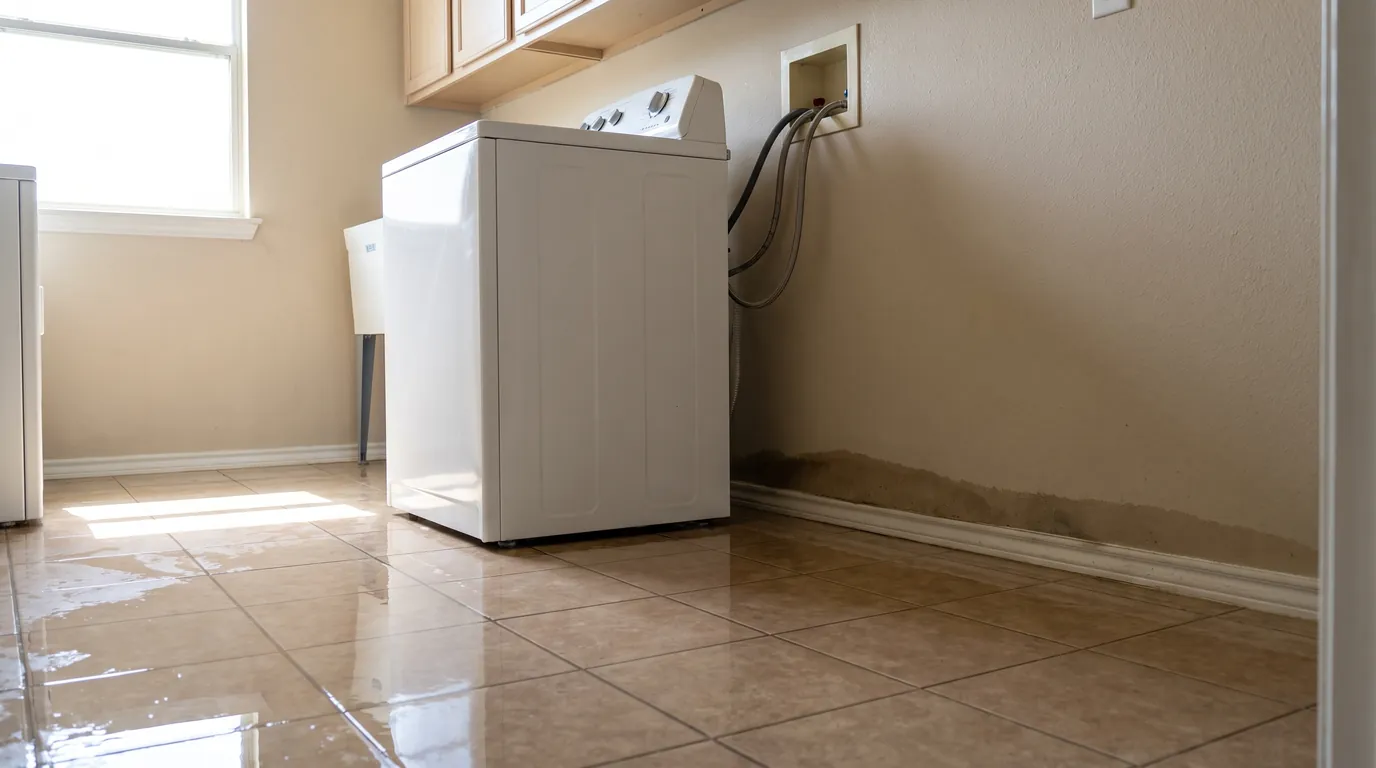
Close the valve behind the machine
For a washer leak, close the two valves in the box on the wall behind the machine. The dishwasher’s supply valve is usually under the kitchen sink, so look there if the dishwasher is leaking. A fridge’s water line has a small valve under the sink or behind the fridge. If a valve won’t close, shut the main.
Where appliance water hides
In a kitchen, appliance water can run under the base cabinets, soaking the toe-kick panels along the bottom and the cabinet floors from underneath. We pull the toe-kick panels so we can check the cabinet bases and the wall behind them. Floating floors and laminate can hold water underneath, so a floor that looks dry can still read wet.
Water from a burst supply hose is clean water. In the Category 1, 2, and 3 water system restorers use, water from the drain side of a washer or dishwasher is gray water, or Category 2. When it’s gray water, we remove wet carpet pad and the bottom of soaked drywall.
Hoses and how old they are
The Insurance Institute for Business and Home Safety’s checklist for appliance hoses gives you these steps for your washer and dishwasher:
- Replace washing machine hoses every 3 to 5 years with braided stainless steel hoses.
- Replace dishwasher supply hoses every 5 years with braided stainless steel hoses.
- Use a drain pan under the washer, especially if the washer is upstairs.
- Never leave home while the dishwasher or washing machine is running.
Insurance and cost
The Texas Department of Insurance names a broken washer hose as an example of sudden and accidental water damage that most home and renters policies cover. Angi’s Austin page, updated August 2026, publishes an average range of $4.76 to $11.89 per square foot for water damage repair in Austin, depending on the water type. You can read more about what Texas policies cover and see the cost guide.