The EPA and the Gypsum Association, the trade group for drywall makers, set most of the rules for wet drywall. The agency is more willing to dry drywall in place, while the trade group leans toward replacing it.
Both agree on the hard cases. Drywall soaked by floodwater or sewage comes out. When the water is clean, deciding whether to dry the drywall in place or replace it takes judgment.
What the EPA says
The EPA’s mold course, updated December 2025, says drywall may be dried in place if there’s no obvious swelling and the seams are intact. If either condition isn’t met, the drywall has to come out. When drywall stays, the wall cavity is the hardest part to dry and should be ventilated. The course also lists drywall and gypsum board among water-damaged materials that may have to be thrown away.
What the Gypsum Association says
The Gypsum Association’s position statement says panels exposed to water should always be replaced unless all four of these conditions are met:
- The source of the water has been found and stopped.
- The water was clean.
- The panels can be dried thoroughly before mold growth begins, typically 24 to 48 hours depending on conditions.
- The panels are structurally sound, with no rusting fasteners or damage to the framing.
If there’s ever doubt, the statement says to replace the panels.
Flood cuts and the insulation behind them
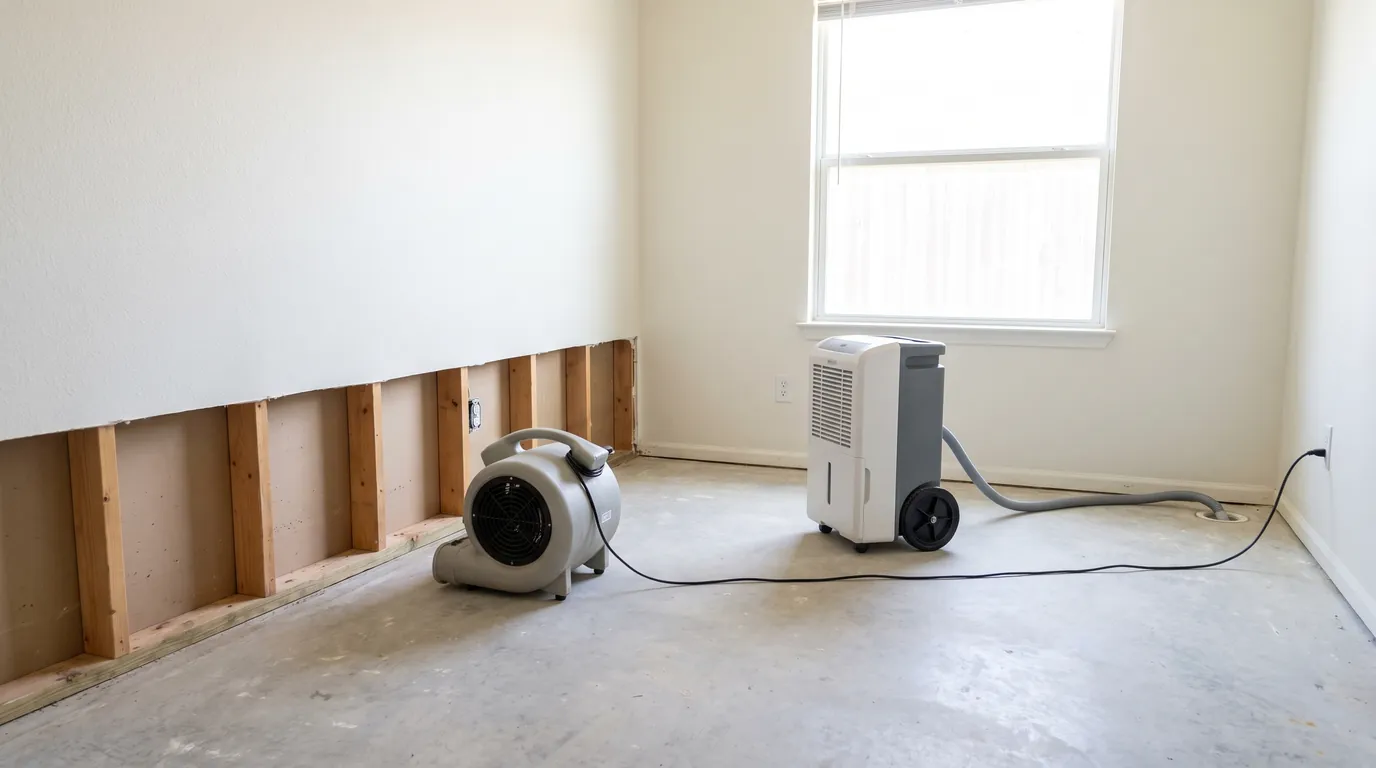
A flood cut is a straight, level cut above the wet line so we can remove the lower drywall and insulation behind it and dry the wall cavity. A 2012 flood recovery advisory hosted on the EPA’s archive addresses long-term flooding after a hurricane. For water less than 2 1/2 feet deep, it advises removing wall material to 4 feet so full sheets of drywall can go back. For deeper water, it advises removal to 8 feet or the ceiling.
The same advisory calls for complete removal of fibrous insulation saturated by floodwater, including fiberglass, mineral wool, and cellulose. Foam plastic insulation can stay and dry. Punching holes in walls doesn’t drain them or make them dry faster. For a clean-water leak, we cut where moisture readings show the wet edge.
How long drywall takes to dry
The EPA’s flood cleanup page says drying a house usually takes several days to weeks, and very humid, warm outside air slows it down. The 2012 flood recovery advisory in the EPA’s archive, written for long-term flooding, presumes drywall dry when its readings are within 5 percent of the same material in a part of the building the water never reached.
The Gypsum Association warns that moisture meters are very poor at telling whether gypsum panels are too wet to use, so use readings as a guide alongside checks for swelling, soft spots, and seams. The EPA says anything that got wet must be completely dry inside before you paint or seal it.
Sources
- EPA, Mold course chapter 4 (updated December 1, 2025)
- EPA, Flood cleanup to protect indoor air and your health (updated March 18, 2026)
- Gypsum Association, Moisture in gypsum panel products (2019)
- Gypsum Association, Storms and flooding technical resources (May 15, 2025)
- Initial restoration for flooded buildings, Hurricane Sandy recovery advisory (2012, EPA archive)