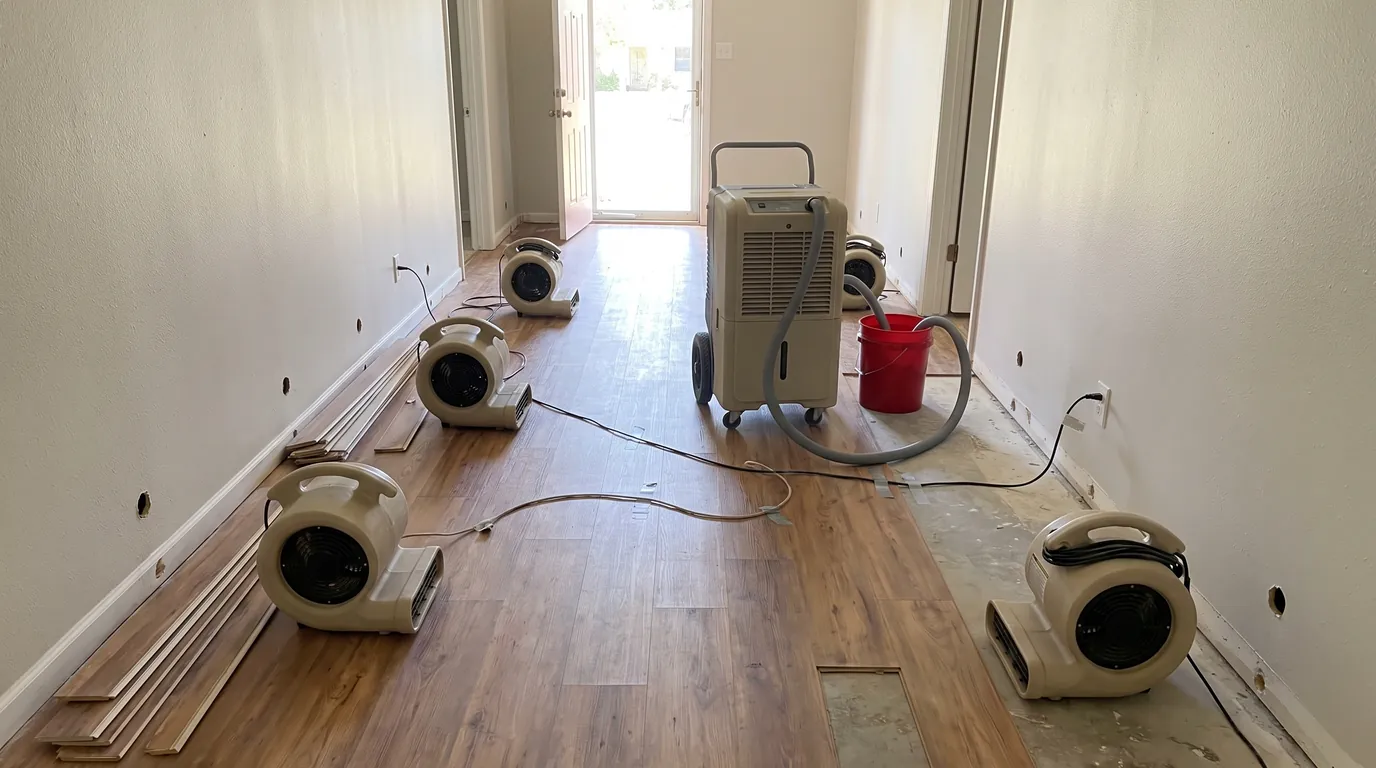
The Texas Department of Insurance (TDI) says most home and renters policies cover sudden and accidental water damage, such as damage from a burst pipe, a toilet overflow, or a broken washer hose. Damage from gradual leaks usually isn’t covered. Coverage varies by company, so read your policy or talk to your agent to be sure.
We’re a restoration company. We don’t serve as an insurer or adjuster, and we don’t negotiate claims. We hand you documentation of the damage and the drying.
Sudden water versus a slow leak
In its home insurance guide, updated June 2026, the Texas Department of Insurance (TDI) lists a sudden and accidental release of water among risks most policies cover and a continuous water leak among those most don’t. TDI’s water and mold page adds that most policies don’t cover water damage from gradual leaks or seepage, including the mold that comes with it.
TDI’s 2018 summary of Texas homeowners policy forms notes that some policies define seepage by how long it lasts. One form excludes leakage over a period of 14 or more days, while others use weeks, months, or years. That’s why the date a leak started, and photos of it, can matter to a claim.
All-risk and named-perils policies
The Texas Department of Insurance (TDI) explains on its September 2025 page on all-risk and named-perils policies that all-risk policies, also called open perils, cover any event the policy doesn’t specifically exclude, and named-perils policies cover only the events listed. If you owe money on your house, your lender will probably require an all-risk policy. All-risk policies usually don’t cover sewer backups, floods, wear and tear, or earthquakes, and they usually don’t pay to remove mold or repair the foundation.
TDI’s 2018 summary groups Texas policies by form. HO-A is named perils, HO-B is all risk for the building and named perils for contents, and HO-C is all risk for both. Since 2003, insurers can use their own forms, so the name on your policy may differ.
Flood is a separate policy
The Texas Department of Insurance (TDI) explains on its flood insurance page that most home policies don’t cover damage caused by floods. Your lender requires flood insurance if you’re in a designated flood zone, and floods can happen anywhere. On average, 40 percent of National Flood Insurance Program claims come from outside the high-risk flood areas.
TDI notes that most flood policies have a 30-day waiting period, so don’t wait for a storm to buy one. A National Flood Insurance Program policy covers the house up to $250,000, and a separate policy covers belongings up to $100,000. TDI’s winter page explains that flood insurance doesn’t pay for damage caused by burst pipes. FEMA’s FloodSmart site says there’s no waiting period if you buy flood insurance while making, increasing, extending, or renewing a mortgage.
Sewer and drain backups
The Texas Department of Insurance (TDI) answers a homeowner’s question about a house flooded by a sewer line backup. “It depends on your policy. Some policies cover water or sewage from outside your house that enters through sewers or drains.” It also lists “backup of sewers or drains” among the add-on coverages most companies offer.
FloodSmart says flood insurance covers water damage from a sewer backup during a heavy rainstorm if the backup is a direct result of flooding. It doesn’t cover a backup caused by clogged pipes. If the backup happened during heavy rain, you can read about why heavy rain backs up sewers.
Slabs, foundations, and mold
The Texas Department of Insurance (TDI) lists “damage to foundations or slabs” as an add-on most companies offer and says all-risk policies usually don’t pay to repair the foundation, so check whether your policy includes that add-on if you’re dealing with slab leak water damage. Mold on an item damaged by a covered water loss would be covered, but mold from a flood wouldn’t because home policies don’t cover floods. Most home policies don’t include mold cleanup and testing after a damaged item is removed, though some insurers let you add it. Make sure a mold professional has a state license.
Filing the claim and the deadlines
On its page on getting a claim paid, the Texas Department of Insurance (TDI) tells you to notify your insurance company as soon as possible and take pictures before repairs. Keep damaged items until the adjuster sees them, and save receipts for temporary repairs. Wait until the insurer sees the damage before making permanent repairs, because your company might deny the claim if you make them first.
TDI’s home insurance guide explains that Texas law requires your company to tell you it got your claim within 15 days. It must accept or deny the claim within 15 business days of getting everything it needs, explain a denial in writing, and send payment within five business days of agreeing to pay. A company that needs more time can take 45 days and must tell you why, and deadlines can be longer after major disasters. It’s illegal for a contractor to waive your deductible.
Sources
- Texas Department of Insurance, Home insurance guide (updated June 1, 2026)
- Texas Department of Insurance, “When are water damage and mold covered by insurance?” (updated April 24, 2025)
- Texas Department of Insurance, All-risk or named-peril policies (updated September 29, 2025)
- Texas Department of Insurance, Texas homeowners policies (April 12, 2018)
- Texas Department of Insurance, Flood insurance (updated August 7, 2025)
- Texas Department of Insurance, Home damaged by a storm FAQ (updated September 15, 2025)
- Texas Department of Insurance, Getting your insurance claim paid (updated April 16, 2025)
- Texas Department of Insurance, Winter safety (updated April 29, 2025)
- FEMA National Flood Insurance Program, FloodSmart