How rain water gets into a slab house
The City of Austin calls Austin the heart of Flash Flood Alley and says neighborhoods built before drainage rules took effect in the early 1980s may have undersized storm drains. Water can pool in your yard or on your street long before any creek rises.
The floor of a slab house often sits only a few inches above the ground outside, so a few inches of standing water reaches the door sills and seeps in under doors and through the bottom of the walls. Clogged gutters, downspouts that dump water at the foundation, and a yard that slopes toward the house all put more water at that line.
Why the drains back up in a storm
Austin’s sewer pipes are separate from the storm drains. Rain can still get into the sewer through cracked pipes, leaky joints, and downspouts tied into it. When the sewer fills faster than it drains, the water has to go somewhere. It can come up through the lowest drains in your house, such as a ground-floor shower, tub, floor drain, or toilet.
Austin Water says to stop using water, call its dispatch line, and take the cap off your cleanout to relieve the pressure. The cleanout is the capped pipe in the yard that opens into your sewer line. For the phone number, who pays, and backwater valves, see why heavy rain backs up sewers.
What comes out after flood water or sewage
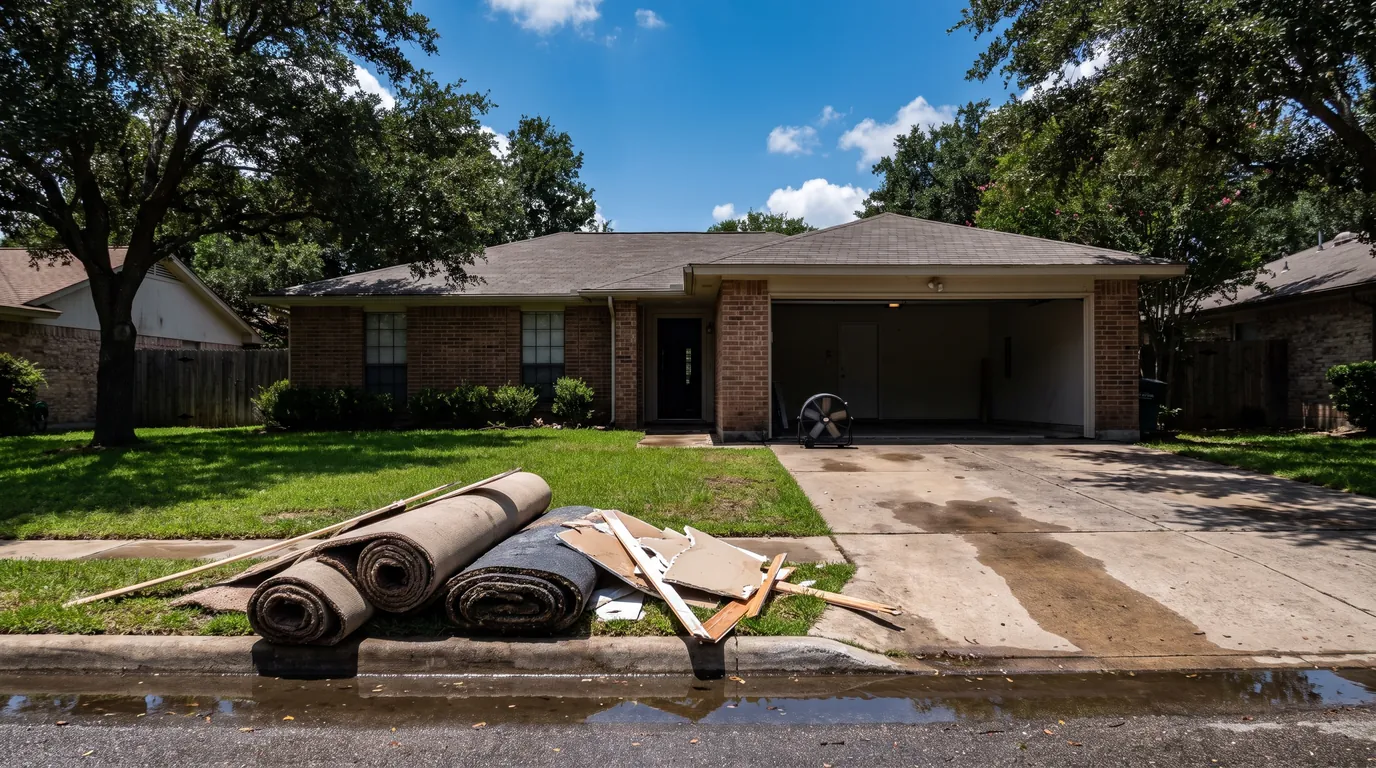
The CDC says to throw out carpet, carpet pad, and upholstered furniture that can’t be cleaned and dried quickly. It also says to remove drywall and insulation touched by floodwater or sewage. After a sewer backup or water that ran in from the yard, we take out the carpet, pad, bottom of the drywall, and insulation behind it. With sewage, we clean and disinfect before the drying equipment goes in because fans blowing across sewage spread it.
Rain that came through a window or the roof is often cleaner than water that ran across the yard and under the door. We judge each room by where its water came from. You can read about Category 1, 2, and 3 water.
Flood policies and sewer backup coverage
The Texas Department of Insurance says most home policies don’t cover floods, sewer backup coverage depends on your policy, and most companies sell backup of sewers or drains as an add-on. FEMA’s flood insurance program says a flood policy covers damage from a sewer that backed up during a heavy rainstorm, though it doesn’t cover a backup caused by clogged pipes. The program also says most flood policies take 30 days to start. You can read about what Texas policies cover.