Stop it at the valve behind the toilet
Lift the float in the tank or close the valve low on the wall behind the toilet to stop the water. If that valve leaks or won’t close, shut off the main and have a plumber replace the valve. Keep flushing to a minimum until the plumber has looked at it.
Clean supply water or bowl water
A burst toilet supply line releases clean water, like a broken pipe. When the bowl overflows with urine but no feces, it’s gray water, or Category 2 in the water categories restorers use. A backup that comes up from the sewer side of the toilet is Category 3, or black water, however it looks. You can read about Category 1, 2, and 3 water.
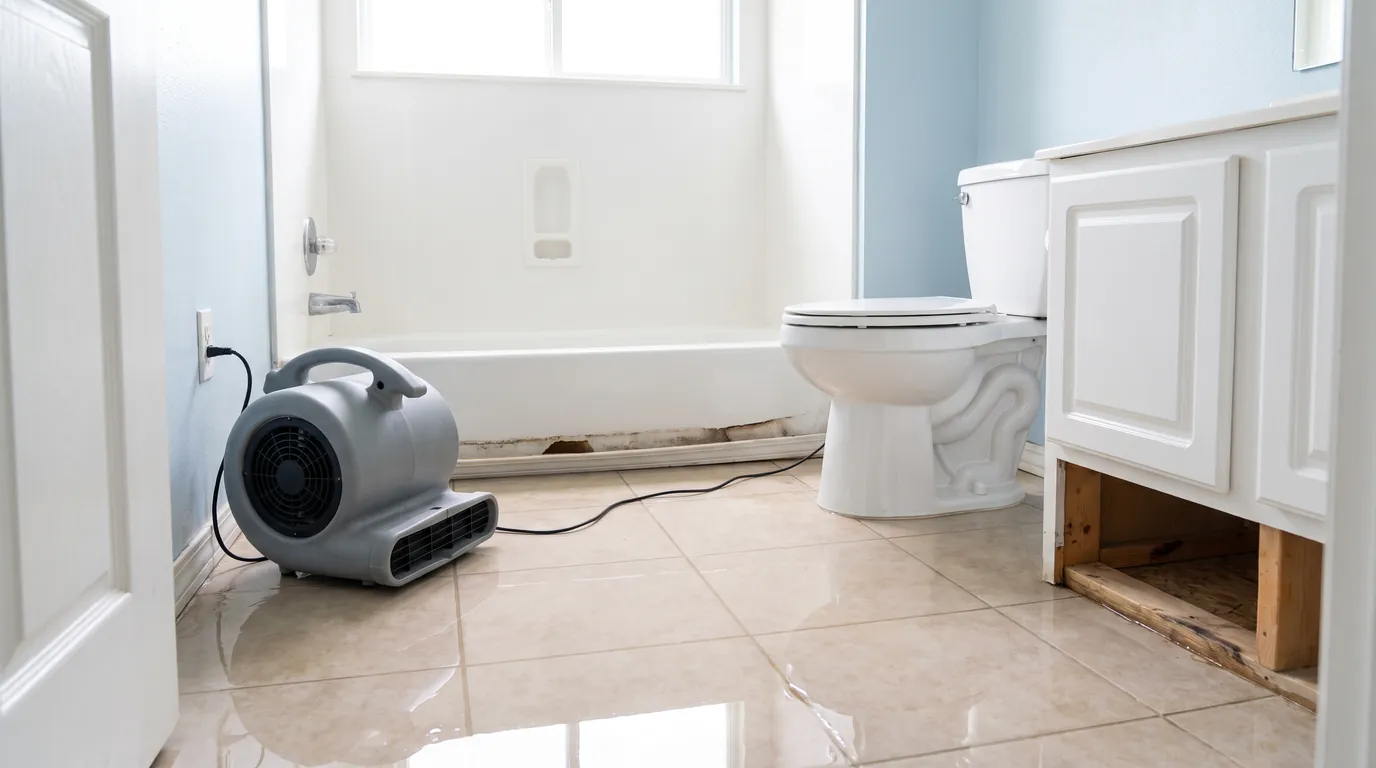
With clean water, we dry most of the bathroom in place. For gray water, we take out wet baseboards and the bottom of soaked drywall. If water backs up from the sewer side, we remove everything porous it touched, then clean and disinfect the room before putting in drying equipment.
A leak at the base
A slow leak at the toilet base can show up as stained grout, a soft spot in vinyl, or a musty smell, even if you don’t see a puddle. A plumber resets the toilet. We take readings in the floor around the toilet, the wall behind it, and the room on the other side of that wall.
Insurance and cost
The Texas Department of Insurance names a toilet overflow as an example of sudden and accidental water damage most policies cover and says policies usually don’t cover gradual leaks, so a slow base leak is a different claim. Fixr (January 2025) publishes $350 as the low end of water damage restoration for a simple cleanup after an overflowing toilet. You can read more about what Texas policies cover and see the cost guide.