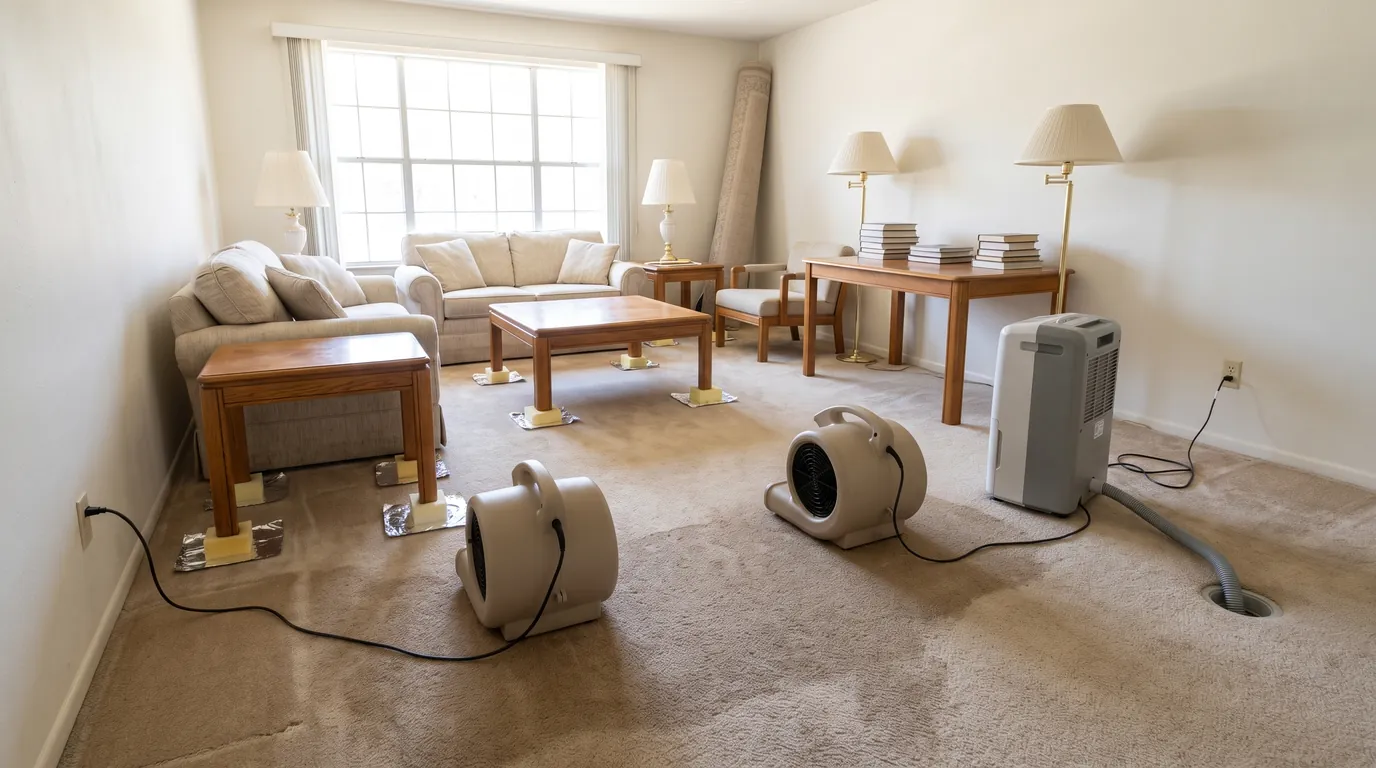
The EPA’s guide to mold and moisture says that if wet materials are dried within 24 to 48 hours after a leak or spill, mold won’t grow in most cases. The Texas Department of Insurance says mold can start growing within a day after a leak.
The steps come from TDI, the CDC, the EPA, and Austin Water, in the order they matter. They apply whether the water came from a pipe, an appliance, or a storm. Floodwater and sewage get their own step.
Make the house safe first
In its guidance on returning to a flooded home, the CDC says to turn off power at the main breaker or fuse on the service panel if electrical circuits or equipment got wet or are near water. If you’d have to step into standing water to reach the main switch, call an electrician to turn it off. Never turn power on or off, or use an electric tool or appliance, while standing in water. Have an electrician check the house’s electrical system before the power goes back on.
Stop the water
The Texas Department of Insurance (TDI) advises stopping the water flow as soon as you can. Know how to turn it off at the main valve or at the valves under your sinks and near appliances. Austin Water explains on its leak page that the customer cut-off valve sits on the service line just past the property line on the private side and shuts off water to the whole property. TDI’s January 2026 water damage post adds that an insurer may deny a claim if you don’t protect your property.
Photograph it before anything moves
The Texas Department of Insurance (TDI) gives these steps for documenting damage on its page on water damage and mold:
- Take pictures or video of the damage before you make any repairs.
- Make a list of your damaged property.
- Keep damaged items until your adjuster has seen them.
- Make temporary repairs, such as putting a tarp on the roof, and keep the receipts. Wait until your insurance company sees the damage before making permanent repairs.
Get the water out and the air moving
The Texas Department of Insurance (TDI) advises you to remove pools of water and start drying the area as soon as you can. Pull up wet carpets and rugs. If you can’t remove the water and dry the area yourself, use a service. For carpet, the EPA advises removing water with a wet vacuum, pulling the carpet and pad off the floor, and drying them with a fan blowing air over them.
On its flood cleanup page, the EPA says most HVAC systems can’t dry out a home by themselves when humidity is very high after a flood. Don’t seal wall cavities or paint anything that got wet until it’s completely dry inside.
Call your insurance company
The Texas Department of Insurance (TDI) advises you to tell your insurance company as soon as possible, and you usually must report water damage hidden from view within days after you first see it. As you look into what Texas policies cover, check your filing deadline because most companies have deadlines to file a claim, and some policies have a one-year deadline unless you can show good cause. It’s illegal for contractors to waive your deductible or help you avoid paying it.
If it was floodwater or sewage
The CDC warns in its guide to cleaning up safely after a disaster that floodwater can contain dangerous bacteria from overflowing sewage and agricultural and industrial waste. If sewage is involved, wear rubber boots, rubber gloves, and goggles. The EPA calls for an N-95 respirator, goggles without vent holes, gloves, pants, a long-sleeved shirt, and boots during flood cleanup. Children and pregnant people should not take part.
The CDC advises throwing away anything you can’t clean or dry quickly, including mattresses, carpeting, carpet padding, rugs, upholstered furniture, pillows, books, and paper. Remove and discard drywall and insulation contaminated with sewage or floodwater. If a flooded house has been closed up for several days, assume it has mold.
Sources
- Texas Department of Insurance, “When are water damage and mold covered by insurance?” (updated April 24, 2025)
- Texas Department of Insurance, “Water damage” (January 29, 2026)
- Texas Department of Insurance, Home insurance guide (updated June 1, 2026)
- Austin Water, Water leaks
- CDC, Reentering your flooded home (updated August 24, 2026)
- CDC, Guidelines for cleaning safely after a disaster (updated August 26, 2026)
- EPA, A brief guide to mold, moisture and your home (updated February 18, 2026)
- EPA, Flood cleanup to protect indoor air and your health (updated March 18, 2026)