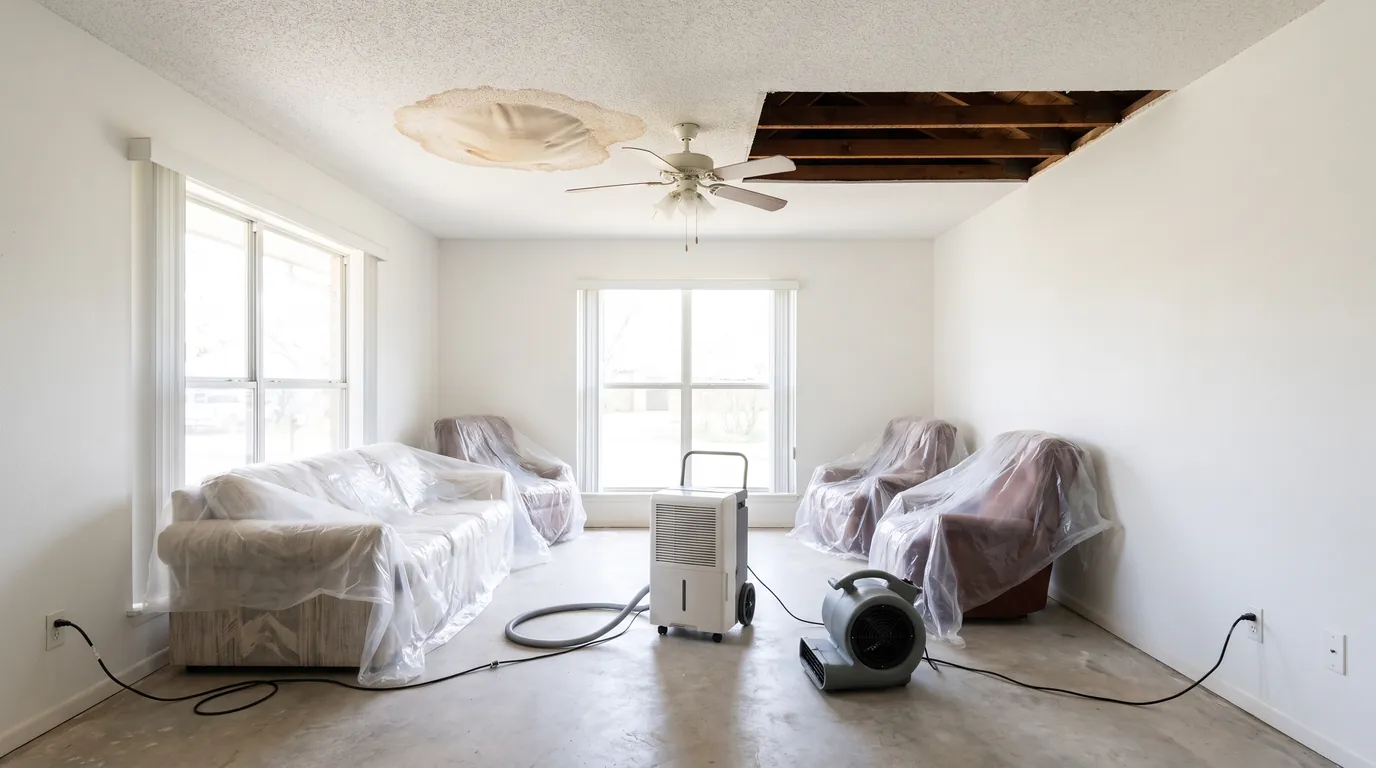
If the ceiling is sagging
A bulge in the ceiling drywall is holding water and can come down. Move people, furniture, and electronics out from under it, and set a bucket under any drip. If the light fixture or fan in that ceiling is wet, turn off that circuit at the breaker only if you can reach the panel from a dry spot. Take photos of the stain and the bulge before anything comes down.
Roof, AC unit, or a pipe above
Water from above soaks the insulation first, so you’ll usually see a stain or soft spot in the ceiling before anything drips. The usual sources are a roof leak, AC leaking water from an attic unit’s drain line, or a water line or water heater up there.
We go up in the attic and follow the wet insulation back toward the source. A roofer fixes the roof, an HVAC tech fixes the AC drain, and a plumber fixes the pipe. We dry what’s under it.
Drying the attic side and the ceiling
We remove the wet insulation over the stain. If the ceiling drywall has sagged or stays wet, we cut it out in a clean square so air can move across the joists as they dry.
After a roof leak, we also check the underside of the roof deck from the attic. That’s the plywood under the shingles, and mold can grow there where nobody sees it. We wait to patch or paint until the ceiling and framing read dry because paint over wet drywall holds moisture in.
Insurance and repair costs
The Texas Department of Insurance says home policies won’t pay for wear and tear or most continuous leaks, and that a temporary tarp is fine if you keep the receipts and wait until your insurer sees the damage before making permanent repairs. You can read more about what Texas policies cover. Angi’s Austin page (updated August 2026) publishes a range of $713 to $2,536 for water-damaged ceiling repair, and you can also read our cost guide.