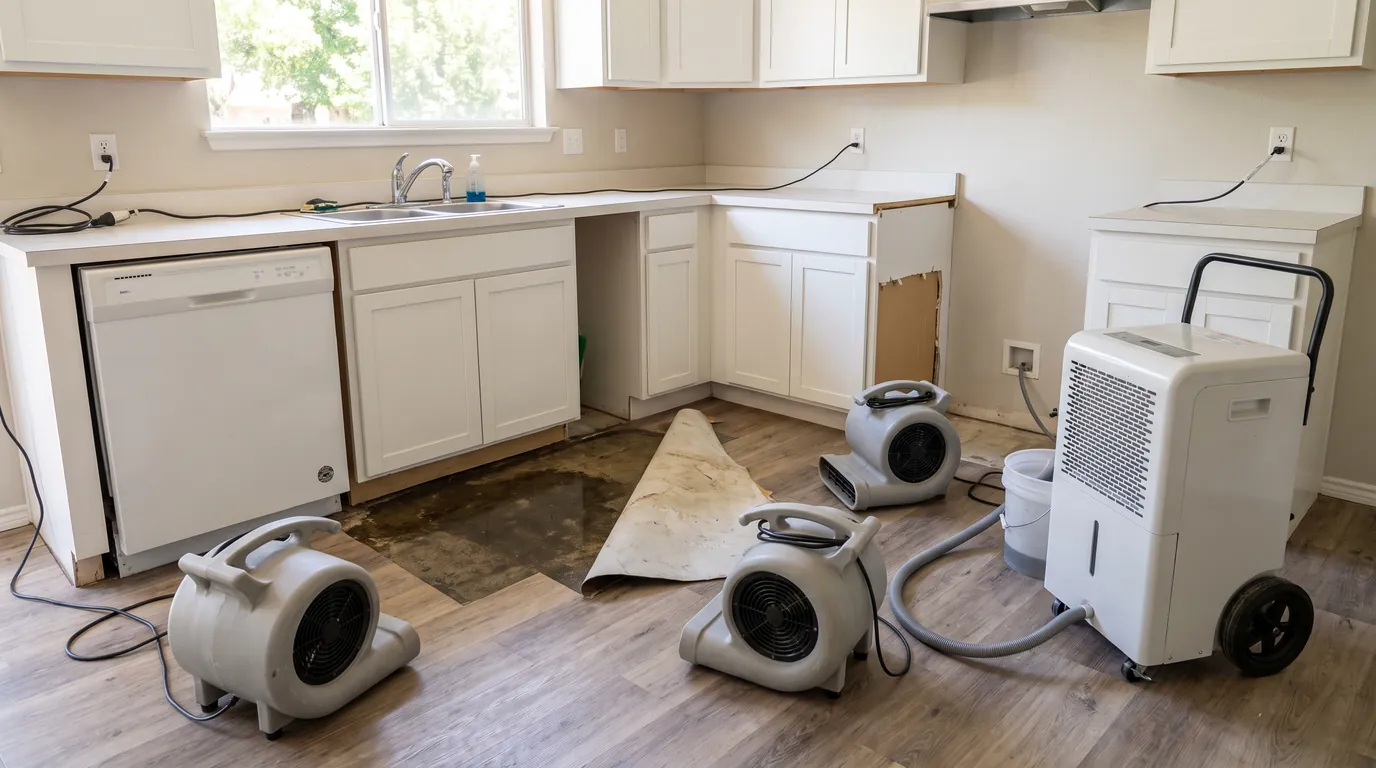
The water categories come from the S500 standard for water damage restoration, published by the IICRC (the Institute of Inspection, Cleaning and Restoration Certification, the industry’s standards body). The current edition is the fifth, from 2021, and a revision is underway. Each category describes how contaminated the water is. Restorers and adjusters use them when talking about a job.
The category determines what can be dried in place, what has to be thrown out, and how much protection the work takes. In its statement quoting the standard, the IICRC puts cleanup and contamination controls before drying for Category 2 or 3.
Category 1 water
UC Riverside’s water intrusion plan follows the IICRC standard. It calls water from a source that doesn’t pose substantial harm to people clean water. The plan gives broken supply lines, tub or sink overflows with no contaminants, appliance supply line failures, and falling rainwater as examples. In its July 2025 quick reference sheet, the Massachusetts Department of Public Health also lists rain coming through a roof, walls, windows, or doors, and leaks from water heaters and plumbing.
Category 2 water
UC Riverside’s plan defines gray water as water with a significant degree of chemical, biological, or physical contamination that could cause discomfort or sickness if someone drinks it or is exposed to it. The plan’s examples include discharge from dishwashers or washing machines, toilet bowl overflows with some urine and no feces, and sump pump failures. It also lists seepage from hydrostatic pressure, when groundwater pushes water up through a slab or in through a wall, as well as chilled and condensate water. You can read about AC leaking water and washer and dishwasher leaks.
Category 3 water
The IICRC’s March 2026 position statement quotes the S500 standard this way. “Category 3 water is grossly contaminated and can contain pathogenic, toxigenic or other harmful agents and can cause significant adverse reactions to humans if contacted or consumed.” Its examples include sewage, backflows from a drain line beyond any trap regardless of how the water looks, and rising water from rivers or streams. A trap is the U-shaped bend in a drain that holds water.
The Massachusetts Department of Public Health (DPH) sheet lists surface water flowing into buildings as Category 3. The Gypsum Association says drywall exposed to sewage or flood water must be replaced.
How clean water turns gray or black
The IICRC statement quotes Section 12.2.6 of the standard, which reads “Time and temperature can affect or retard the amplification of contaminants, thereby affecting its category.” UC Riverside’s plan explains that clean water touching building materials and contents can get dirtier as it mixes with soil and other contaminants over time. Gray water left untreated in a building for more than 48 hours may become Category 3. The sooner we get standing water out, the more of your house can stay.
Rain isn’t automatically black water
In March 2026, the IICRC said top-down water, wind-driven rain, and water from weather events aren’t automatically Category 3. Rain that comes through your roof is different water from heavy rain flooding that runs across your yard and into the house. We judge each area by where its water came from and what it ran through.
Sources
- IICRC, S500 standard page
- ANSI/IICRC S500 Consensus Body, weather-related water position statement (March 16, 2026)
- University of California, Riverside EHS, Water intrusion and mold remediation plan (revised January 25, 2021)
- Massachusetts Department of Public Health, Quick reference: water damage response in buildings (July 2025)
- Gypsum Association, Storms and flooding technical resources (May 15, 2025)