Shut it off at the cut-off valve
The shutoff for the whole house is the customer cut-off valve on the service line, just past the property line on your side of the meter. If you can’t find it or it’s stuck, a plumber can shut off the water.
If water has reached outlets or light fixtures, turn off the power at the main breaker only if you can reach the panel from a dry spot. The CDC says to call an electrician if you’d have to step into water to reach it. Take photos before anything else moves, then move rugs, furniture, and boxes off the wet floor. For what to do next, see the first 48 hours.
Where the water from a burst pipe ends up
Many Austin houses sit on a concrete slab. Water runs along the slab under baseboards, carpet, and floating floors, reaching the next room and the closets. Drywall wicks it up from the bottom, so what you can see on the floor may not show how far it has spread.
If a line in the attic leaks, the water soaks the insulation first, then the ceiling drywall. We walk every room with a moisture meter, including rooms that look dry, and mark the wet edges before we pull anything.
How we dry it out
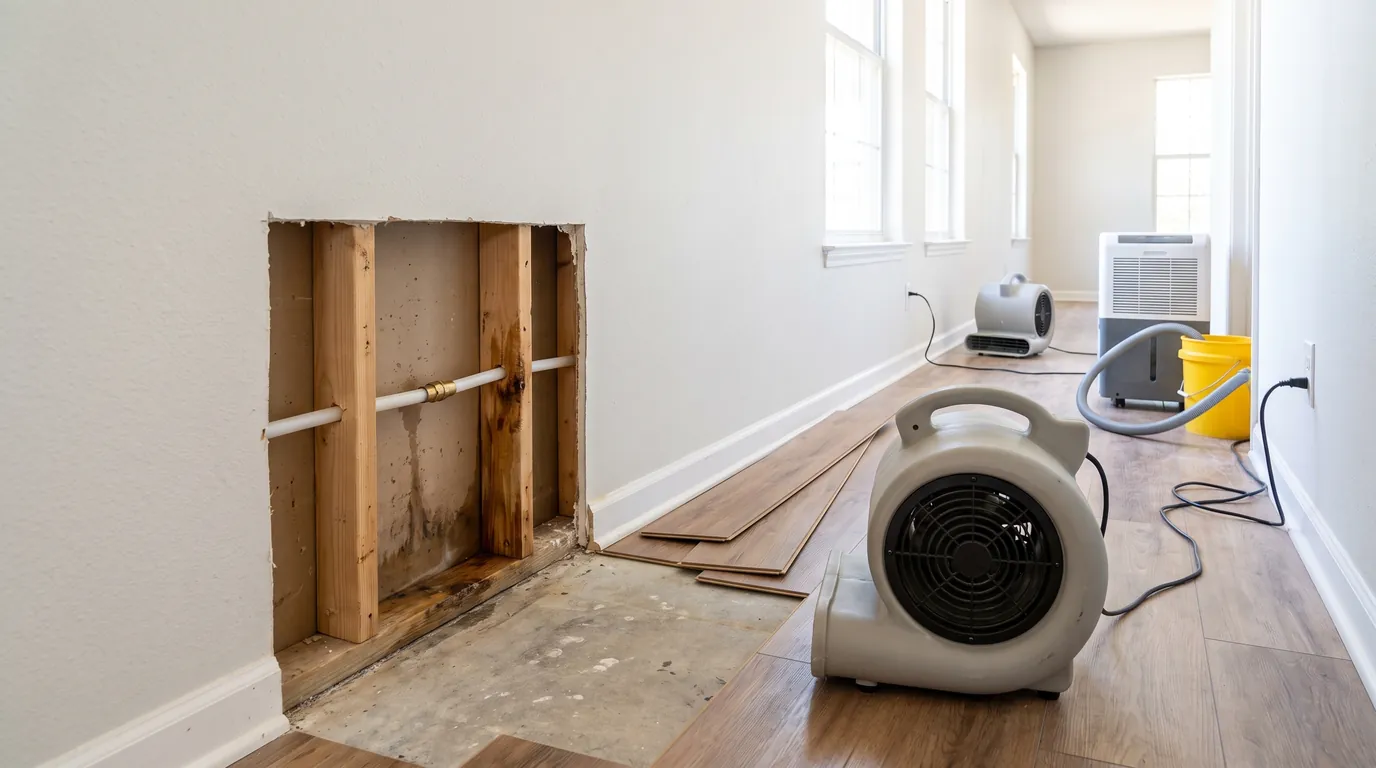
We extract the standing water, then pull the baseboards and wet carpet pad. We cut the wet drywall in a straight, level line just above the wet edge and remove the wet strip below the cut and the wet insulation behind it so the wall cavity can dry. Then we set air movers and dehumidifiers and take moisture readings every day.
Water from a supply line is clean water, the easiest kind to dry, so most of the drywall above the cut usually stays. The EPA says wet materials dried within 24 to 48 hours usually don’t grow mold, which is why we start as soon as the water’s off.
Frozen pipes in an Austin freeze
Hard freezes don’t come often in Austin, but when one hits, pipes in the attic and outside walls, along with outdoor faucets (hose bibs), are the ones that split. A split pipe often won’t leak until it thaws, so water may show up a day or two later.
Before a freeze, open the cabinets under sinks so the house’s heat can reach the pipes, and keep the heat on. If you’ll be away, shut off the water at the cut-off valve and leave the heat on. If your pipes freeze, shut off the water before they thaw so a split line can’t flood the house.
Insurance and what it costs
The Texas Department of Insurance names a burst pipe as an example of sudden and accidental water damage most home policies cover, though a policy might not pay for frozen pipes if you didn’t take steps such as keeping the heat on. Angi, updated September 2026, publishes a range of $1,000 to $4,000 for repairing a burst pipe and the water damage that comes with it. Our guides cover Texas homeowners insurance and what water damage costs.