Signs the water is coming from under the floor
The first signs of water coming from under the floor tend to show up like this:
- A warm spot on the floor from a hot water line.
- A water bill that jumps, or water pressure that drops.
- The sound of running water when nothing in the house is on.
- Damp or stained flooring or baseboards, or soggy spots in the yard near the foundation.
For a quick check, write down the water meter reading, use no water for a few hours, and read it again, because a changed reading means something’s leaking.
Who finds it and who dries it
A plumber locates the leak and fixes it through the slab or by rerouting the line through the walls or attic. We work around either approach. We pull the flooring, set equipment, and take readings while the plumber works on the line.
Angi (September 2026) reports that slab leak repair averages $2,280 nationally, including leak detection, with most homeowners paying $630 to $4,400. You can also read the cost guide.
Drying a wet slab before the floor goes back
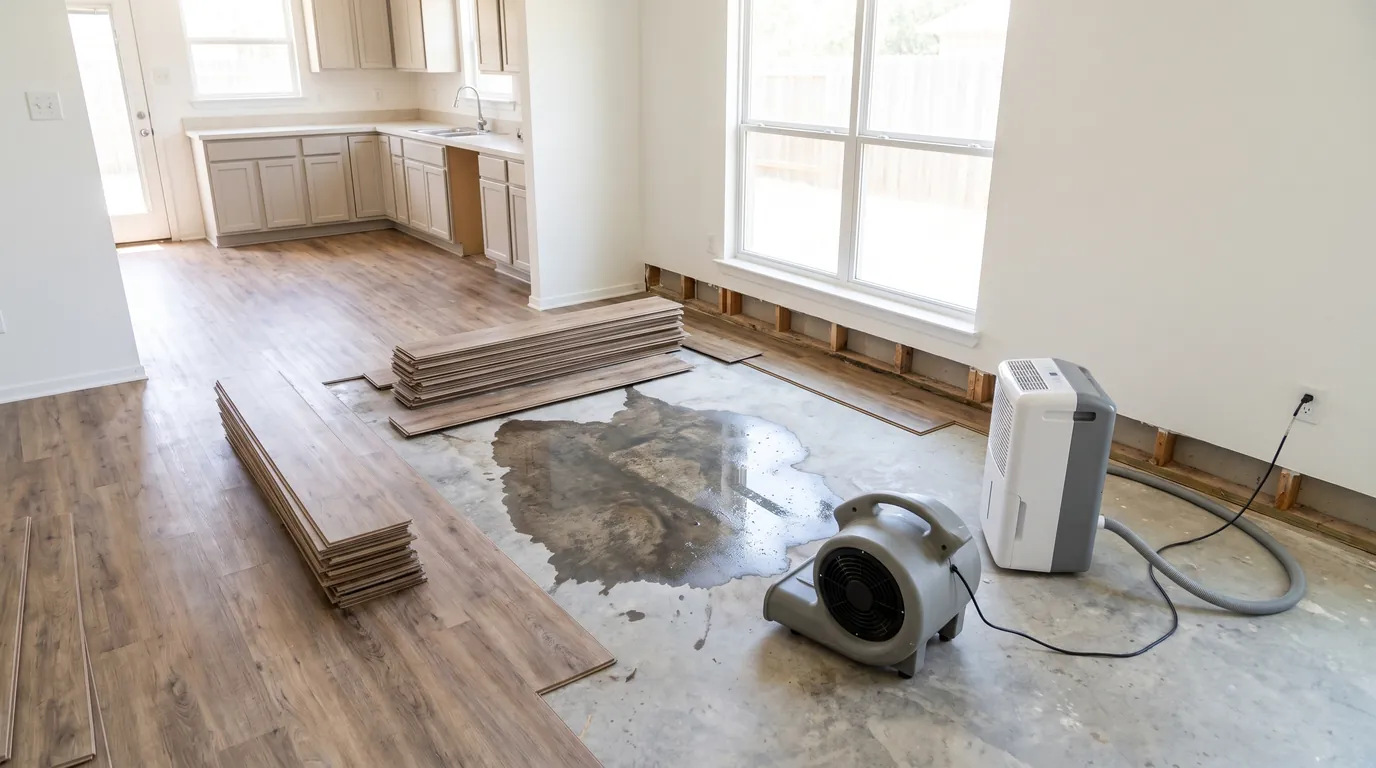
Concrete holds water a long time. The bottom of the drywall on every wall touching the wet area soaks it up too. We pull up carpet pad and floating floors so the slab can dry, then remove baseboards and cut the drywall where it reads wet.
Before new flooring goes down, we tape a square of clear plastic to the slab and leave it about 16 hours. The EPA describes this check. Moisture on the underside of the plastic means the slab is still too wet, so we use the check along with our meter readings before we call the slab ready.
What insurance says about slabs
The Texas Department of Insurance says all-risk policies usually don’t pay to repair a home’s foundation and lists damage to foundations or slabs as an add-on most companies sell. Water damage inside the house and damage to the slab can be treated differently, so ask your agent about your policy. You can also read what Texas policies cover.